Rive CLI + RML
Scene authored as markup by a coding agent, previewed live, verified and pushed to the Editor.
Rive Halloween Challenge · October 2026 · Play the scene
Indonesia's scariest ghosts, made cute. Pocong and Kuntilanak haunt a misty graveyard on a malam Jumat, built with the Rive CLI, Claude Code and a WGSL GPU Canvas shader.
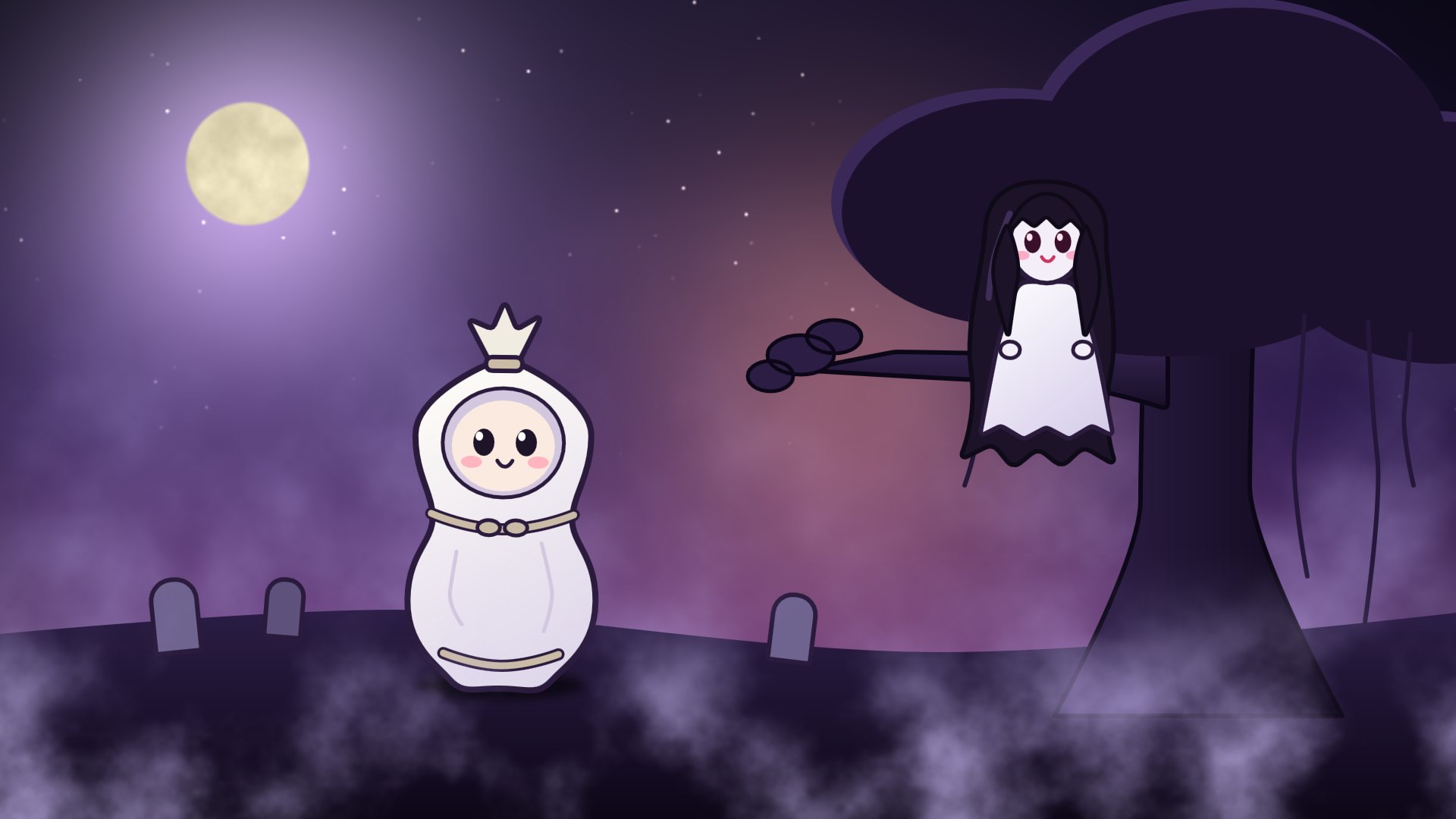
In Indonesia the scariest ghosts come from folklore, not jack-o'-lanterns. On a Friday night, the night they're said to wander, two of the most famous ones get a softer look.
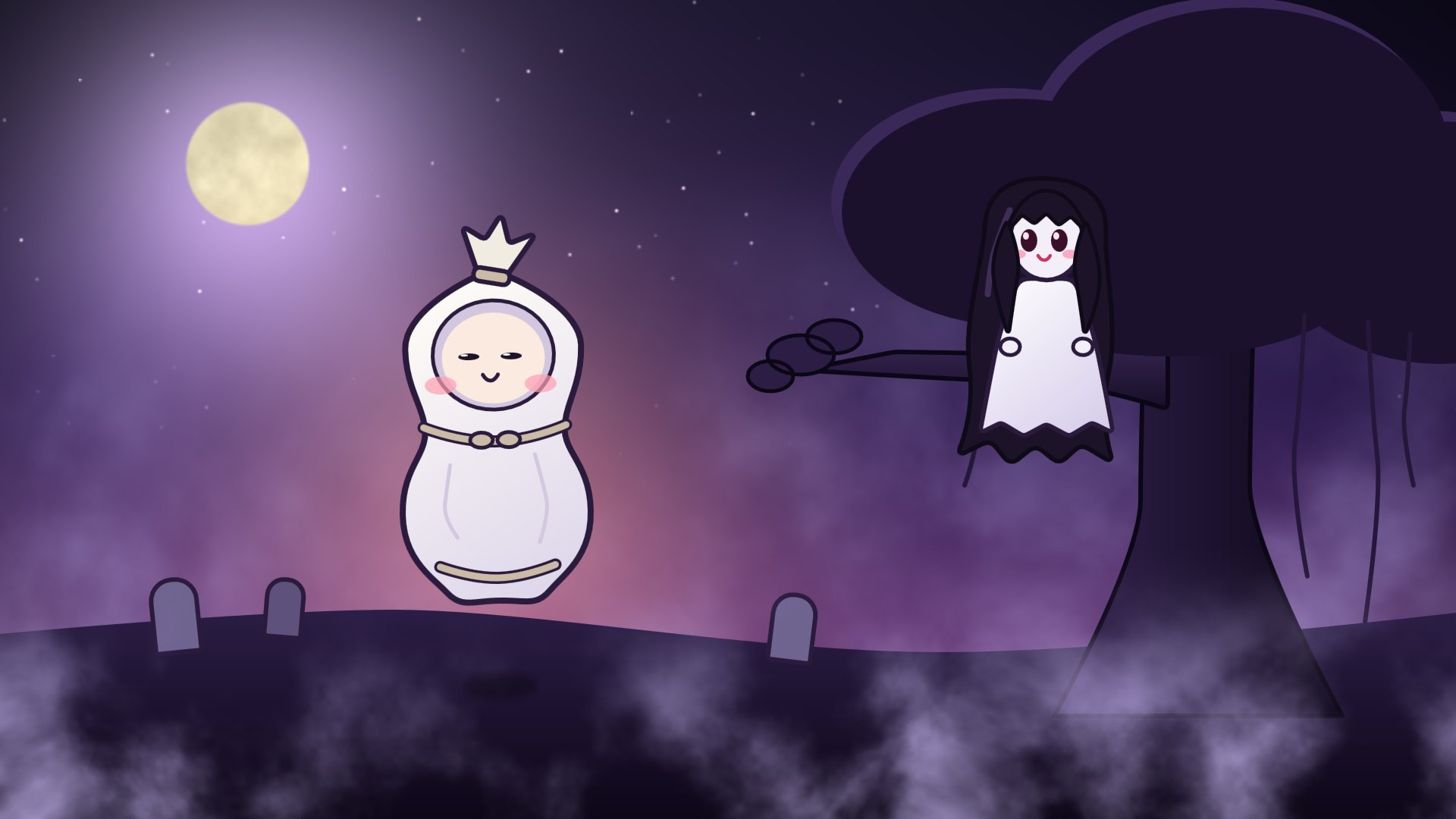
A soul wrapped in its burial shroud, tied at the head and feet, so it can only hop. Click it and it does three happy hops.
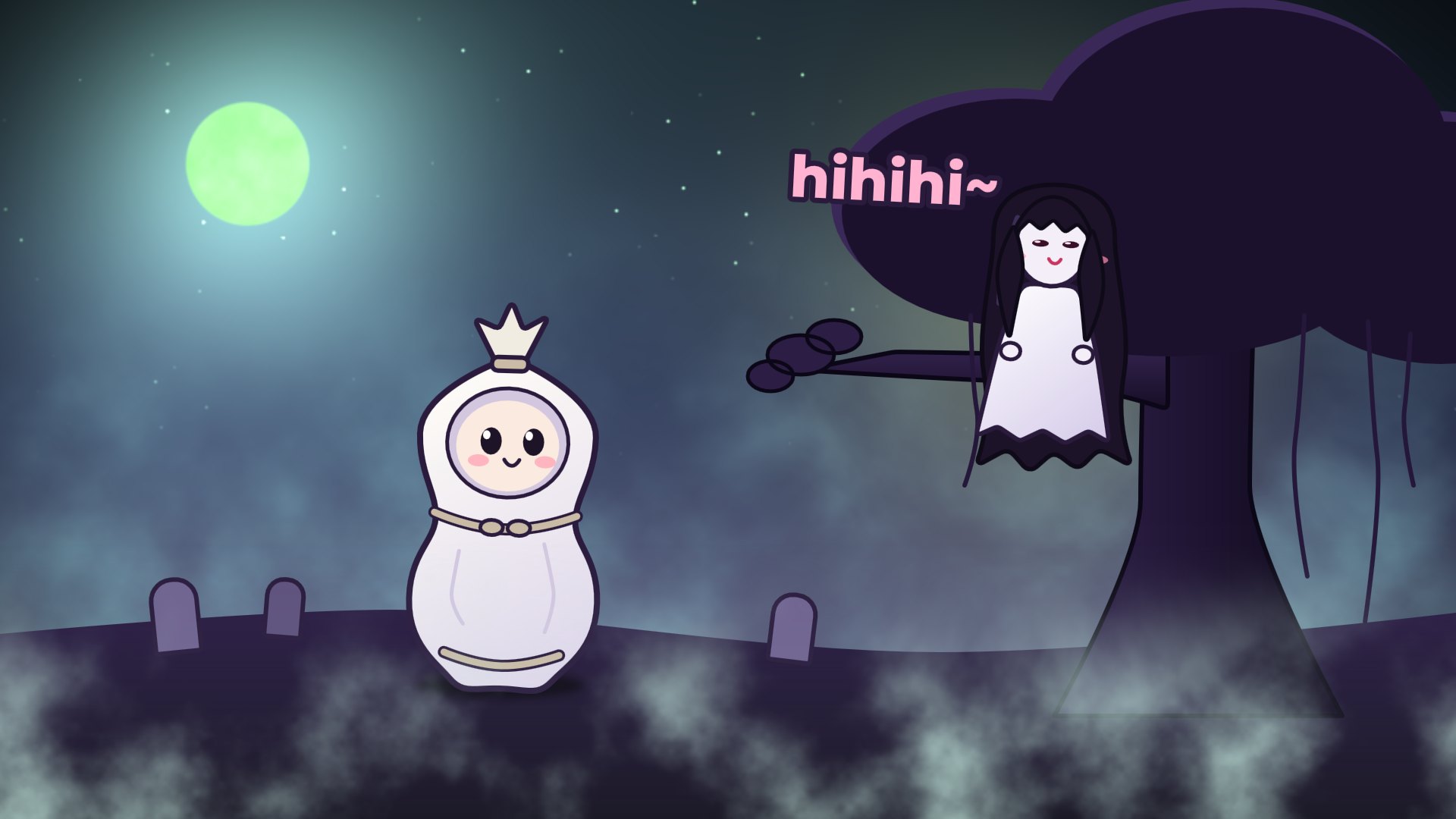
The long-haired ghost in a white dress who sits in a banyan tree, known for her "hihihi~" laugh. Click her and she giggles, and the whole night turns a spooky green.
Your cursor is a lantern. Both ghosts follow it with their eyes, and the fog pulls back where it shines.
Rendered straight from the Rive file with the CLI's headless capture.
Claude Code drove the Rive CLI from a terminal. I gave direction; it wrote the scene, checked its own work and fixed what it saw.
Claude Code opened the challenge page, summarized the rules and scoring, and suggested concepts. I picked Indonesian folklore: Pocong and Kuntilanak, but cute.
It installed the CLI, ran rive create, and left rive hantu-lucu open as a live preview that rebuilds on every save.
The whole scene is Rive Markup Language: every shape, gradient, eye and blush, built in passes from wireframe to detail. Types were looked up with rive schema instead of guessed.
One WGSL shader draws the sky, stars, two fog layers, the lantern glow, click ripples and the scare flash, driven from a Luau script.
State machine layers for blinking, Pocong's hops and Kuntilanak's giggle; click listeners fire view model triggers; data binding moves the eyes.
Every change was checked with rive --verify, rive inspect and simulated clicks like --pointer=click@330,330, comparing screenshots before and after.
rive push sent the project to the Rive Editor for the human-touch pass.
Both challenge tools, plus the rest of Rive's interactive toolkit.
Scene authored as markup by a coding agent, previewed live, verified and pushed to the Editor.
One shader running as two layers: the sky behind the ghosts and the ground mist in front of them.
Three layers: Blink, Pocong (still → three hops) and Kuntilanak (float → giggle), driven by view model triggers.
The cursor becomes view model values that move both ghosts' eyes and tilt Pocong toward the lantern.
Feeds the shader its uniforms, and the giggle animation keys a script input that triggers the scare flash.
The coding agent that wrote the RML, Luau and WGSL, and tested every interaction before showing it.
Two sheets of noise drift at different speeds, get thicker near the ground, and thin out where the lantern shines.
mist.wgsl
if (layer < 0.5) {
    var col = sky(px, res, t);

    // Two fog sheets drifting at different speeds, thicker near the ground.
    let f1 = fbm(warped / 140.0 + vec2f(t * 0.035, t * 0.01));
    let f2 = fbm(warped / 70.0 + vec2f(-t * 0.06, 0.0) + 11.0);
    var fog = smoothstep(0.35, 0.95, f1 * 0.65 + f2 * 0.45);
    fog *= smoothstep(0.15, 0.75, y) * 0.75;
    fog *= 1.0 - glow * 0.85;
    col = mix(col, vec3f(0.62, 0.55, 0.8), fog);

    // Lantern light: warm, flickering a little like a candle.
    let flicker = 0.85 + 0.15 * sin(t * 13.0) * sin(t * 7.3 + 1.3);
    col += vec3f(1.0, 0.62, 0.25) * glow * 0.45 * flicker;
}